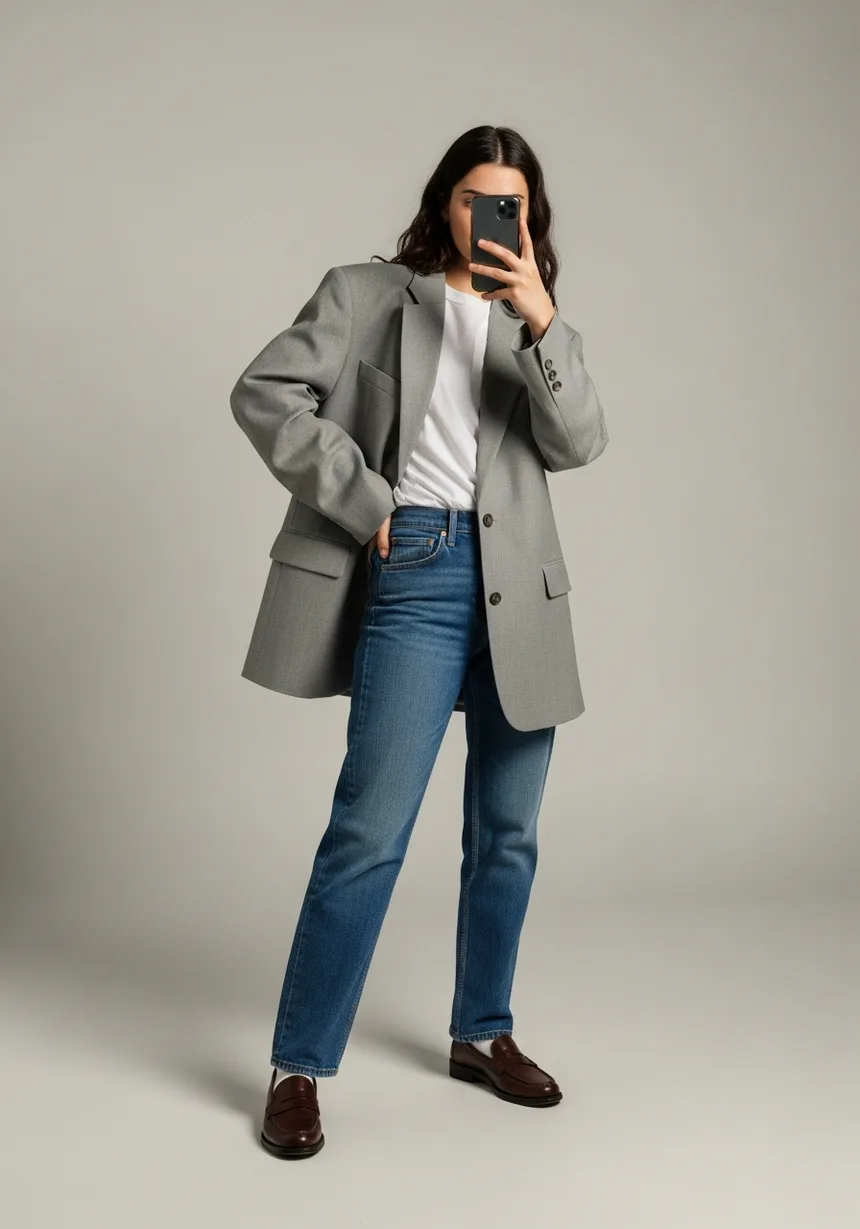
You stand in front of an open wardrobe, and end up wearing yesterday’s outfit again. There are plenty of clothes in there, and still nothing to wear. Stranger yet: it happens again a month after you tidied the whole thing.
Which means tidying was not the answer. So what is?
1. Why tidying doesn’t hold
Organising a wardrobe solves a space problem. But “nothing to wear” is not about space — it is about judgement. What we actually do in the morning is not locate clothes; it is decide what suits today’s weather.
That is why a beautifully arranged wardrobe leaves you just as stuck. You know where the knit is. You still don’t know whether it is right for 15°C.
2. The three real causes
- 1You don’t actually know what you own — anything at the back of the wardrobe is effectively not there. You rotate the front few pieces, and that feels like having nothing.
- 2You have few combinations, not few clothes — ten tops and five bottoms still usually means three or four outfits you actually wear.
- 3Nothing connects your clothes to temperature — the most-missed one. You can’t recall what felt right this time last year, so you repeat the same trial and error annually.
3. Why logging comes before tidying
Tidying is the act of identifying what you don’t wear. But to do that you first need to know what you actually do wear — and most of us judge that from memory, which is unreliable. Hence the regret over things you gave away, and the things you kept and never touched.
Reverse the order and it gets easy. Log what you wear for a few weeks, and you can sort your wardrobe on evidence rather than instinct.
4. What to log — the clothes and the weather
The point is not to log the outfit alone. Record it alongside that day’s temperature, or it won’t be useful later. “Grey knit” means nothing in six months. “12°C, grey knit and trench, felt right” is something you can reuse next year.
- Temperature — the important one. 12°C and 18°C want completely different clothes.
- How it felt — one line on whether you were cold or warm. That becomes the basis of the next decision.
- One photo — far faster than describing a combination in words.
5. What surfaces after two or three weeks
- How few combinations you truly rotate — usually five or six.
- Which temperature band your wardrobe is thin at — most often 10–16°C.
- Which pieces you have never once reached for — as fact, not as a hunch.
Then shopping changes. You buy to fill an empty temperature band rather than because something was pretty. The wardrobe doesn’t grow, but the number of wearable outfits does.
6. What you can do today
No need for a system. Photograph what you wore today and note the temperature beside it — that is enough to start. If you are unsure what today’s reading calls for, start from what to wear at every temperature, and if the outer layer is the hard part, see outerwear by temperature.