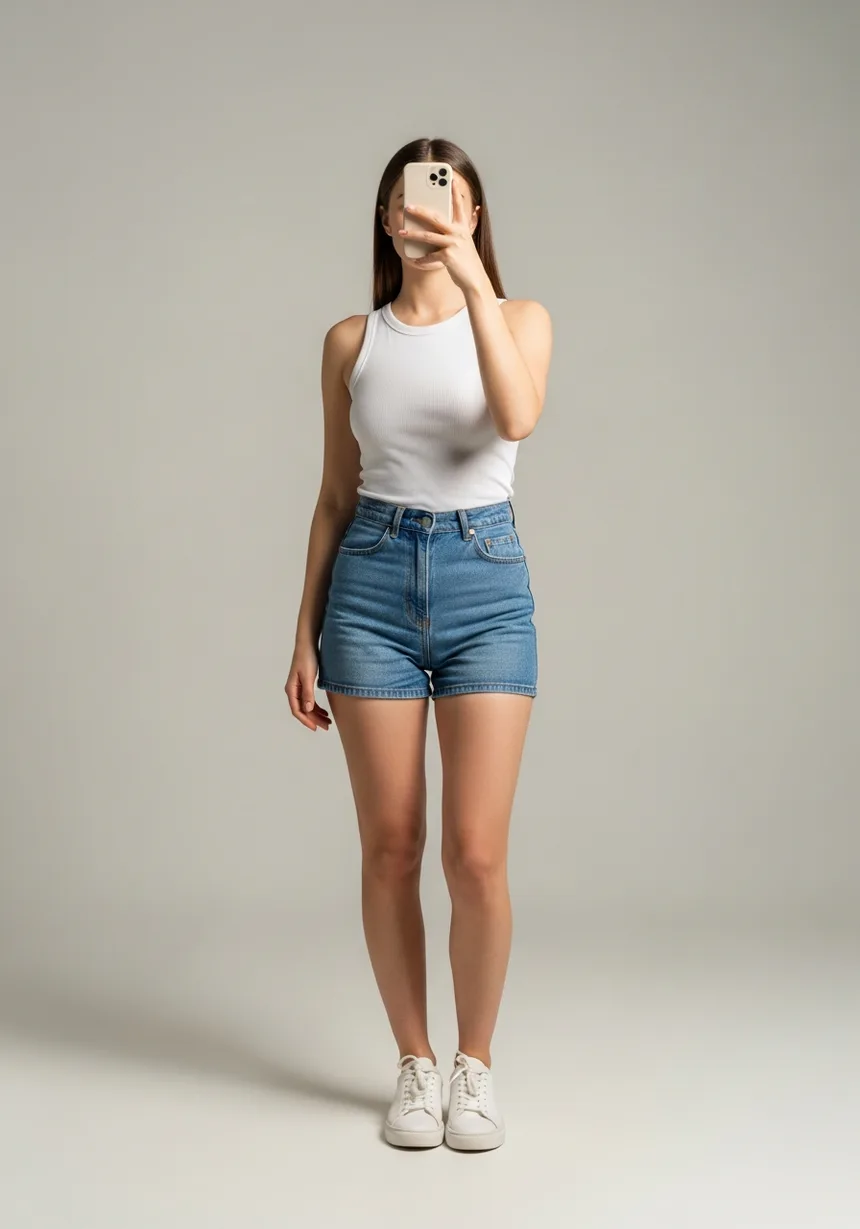
26°C outfits for women
Short sleeves by default. A thin layer only needs to handle air-conditioning and the evening breeze.
What to reach for
Indoor cooling is often the real problem — a cardigan that fits in your bag beats a proper jacket.
WARM
Short sleeves with a light layer on hand.


26°C is at the warmer end of the warm range (23–27°C); you can go a notch lighter than the middle of this band.
In an average year, 26°C turns up in June, July, August and September. Those months share this temperature, so their outfits carry over directly.
Compared with 25°C you can drop a layer, and from 27°C upward you can leave the outer layer at home more often.
What 26°C feels like in different conditions
26°C is warm — short sleeves become the default, but carrying one thin layer for air-conditioning and the evening breeze makes the day easier. You'll meet it in early and late summer.
A breathable tee or thin shirt with cotton pants or a dress is plenty. When the sun is strong, light colors and thin fabrics lower how hot you feel.
Short sleeves by default. A thin layer only needs to handle air-conditioning and the evening breeze.
What to reach for
Indoor cooling is often the real problem — a cardigan that fits in your bag beats a proper jacket.
One short-sleeve layer is enough. Treat outerwear purely as air-conditioning insurance.
What to reach for
This is where sweat starts. Breathability decides how it feels far more than thickness does.
What to avoid — Heavy denim or knits run hot at midday.
Short sleeves are comfortable at midday. Still, carry a thin long-sleeve shirt for air-conditioning and the evening breeze.
Outdoors, not really — but indoor air-conditioning is often strong, so one thin layer is handy.
Linen and thin cotton breathe well and feel cool. Lighter colors absorb less sun.
Short sleeves or a light shirt. 26 degrees Celsius is comfortable outdoors, so the only layer worth carrying is a thin one for air-conditioning and the evening.